How can a city agency communicate its design review process clearly without overwhelming people, while still keeping the important technical details intact?
My role
User Researcher | Communication Designer
Scope
The Public Design Commission (PDC) oversees New York City’s public architecture, landscape architecture, and art installations. My work focused on improving communication around the Commission’s design review process through two main streams: -> a long-term research and outreach project engaging Community Boards (CBs) as key intermediaries between the city and its residents, which included surveys and interviews to better understand their needs and communication gaps; -> and concurrent design support for broader Commission initiatives, such as creating presentation decks for Design Awards voting, designing stairwell posters showcasing award winners, and producing animated content to introduce new digital outreach tools.
Highlights
Conducted interviews with agency liaisons from DOT, Parks, EDC, DEP, and DDC to understand communication flows and identify gaps
Engaged 59 Community Boards through surveys to gather public input and insights
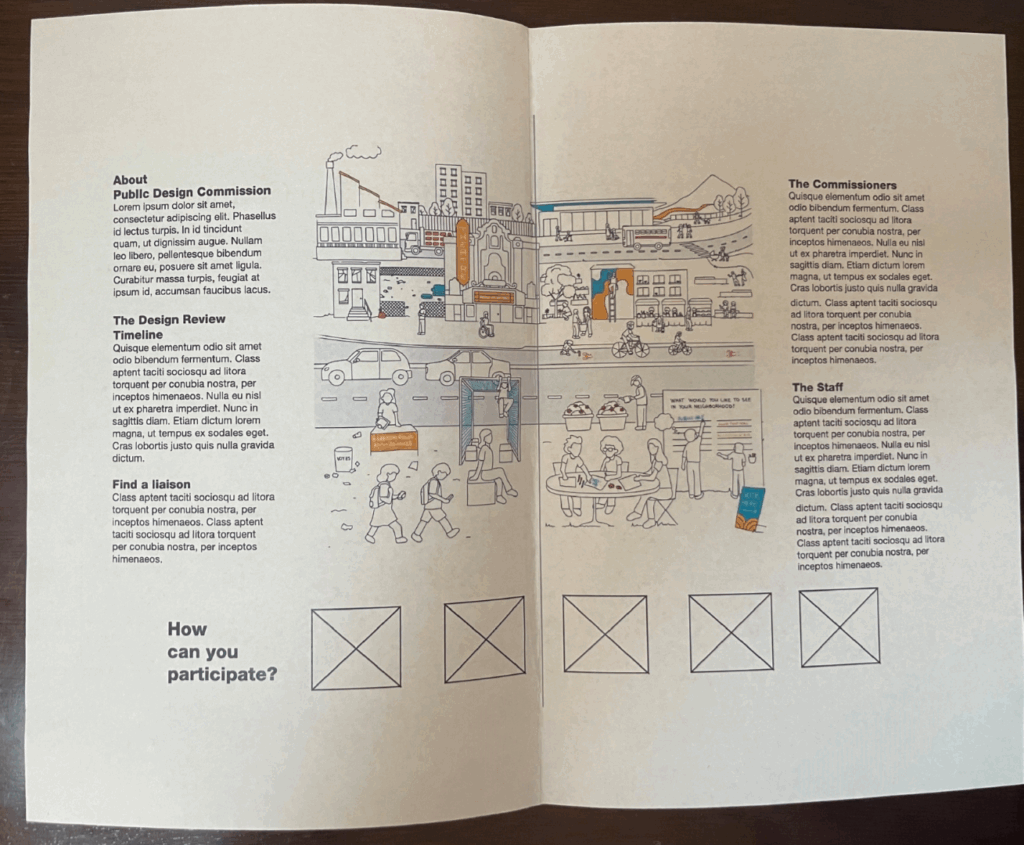
Developed a modular brochure and storyboard adaptable accross formats (print, email and social media)
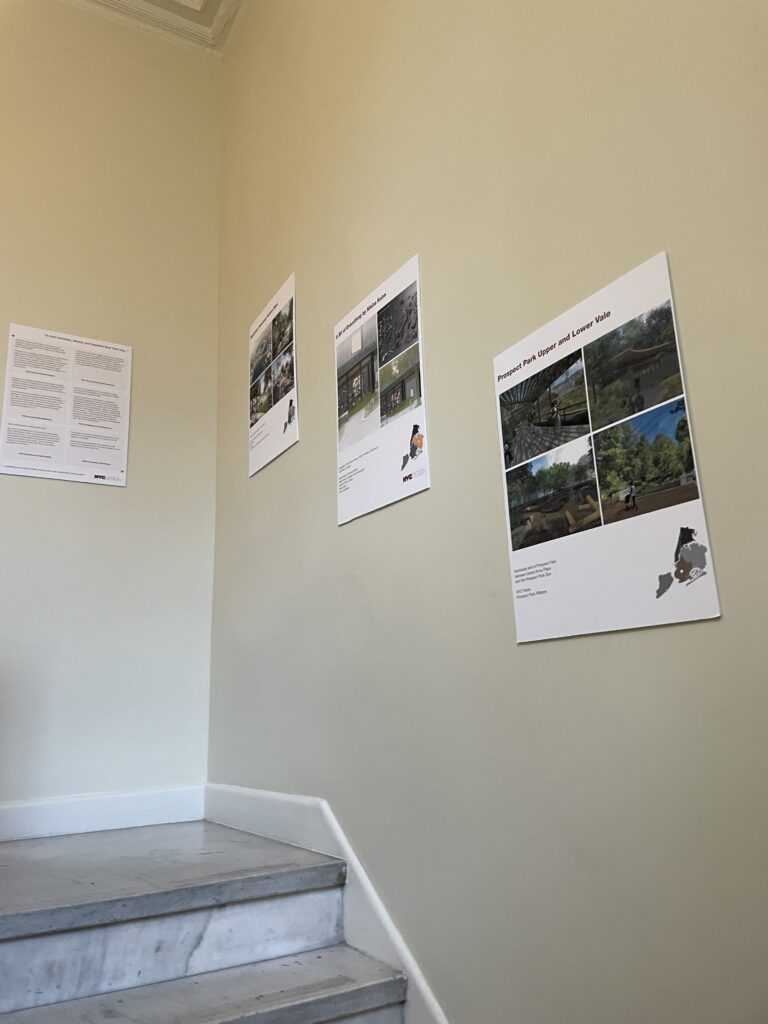
Created presentation decks for commissioners to support voting on this year’s Design Awards & designed stairwell posters showcasing winners from the previous year’s Design Awards
Produced animated content introducing new digital tools for public outreach
Research Approach
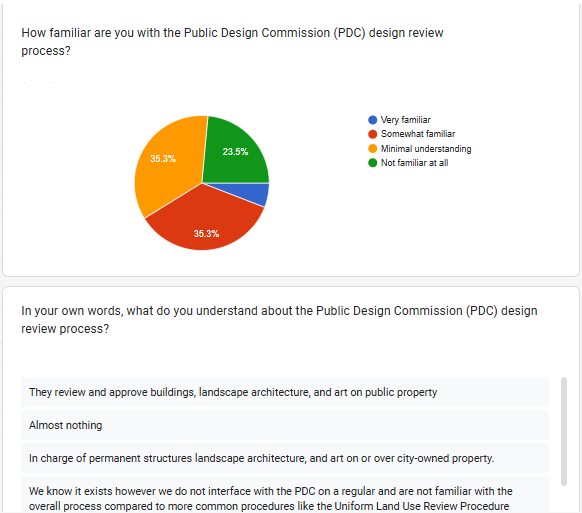
I decided to approach the project by first gathering insights from agency liaisons from various city departments like DOT, NYC Parks, EDC, DEP, and DDC. These liaisons often serve as the primary communicators between the city agencies and Community Boards. Through interviews, I sought to understand their methods of communication with CBs, the existing challenges, and where communication often broke down. In addition to interviewing the liaisons, I designed and distributed a survey to Community Boards. The survey focused on understanding how CB members perceived the PDC process, what barriers they faced in engaging with the Commission, and their preferred methods of receiving information. With these dual sources of data, from both the liaisons and the Community Boards, I was able to gather a comprehensive view of the communication challenges and needs.
Findings
Interviews with agency liaisons emphasized the importance of maintaining the established communication flow through liaisons, as bypassing them could cause confusion, delays, or undermine process authority. They stressed that communication materials must clearly define the roles and responsibilities of each stakeholder while respecting this structure.
Meanwhile, survey responses from Community Boards revealed a lack of clarity about the Public Design Commission’s role, the design review process, and engagement timelines.
Many members expressed a preference for more visual explanations like videos and webinars, alongside concise written materials such as emails or one-pagers. These insights shaped the strategy for the final deliverable: a communication tool that both clarifies the design review process and reinforces the liaison’s essential bridging role.
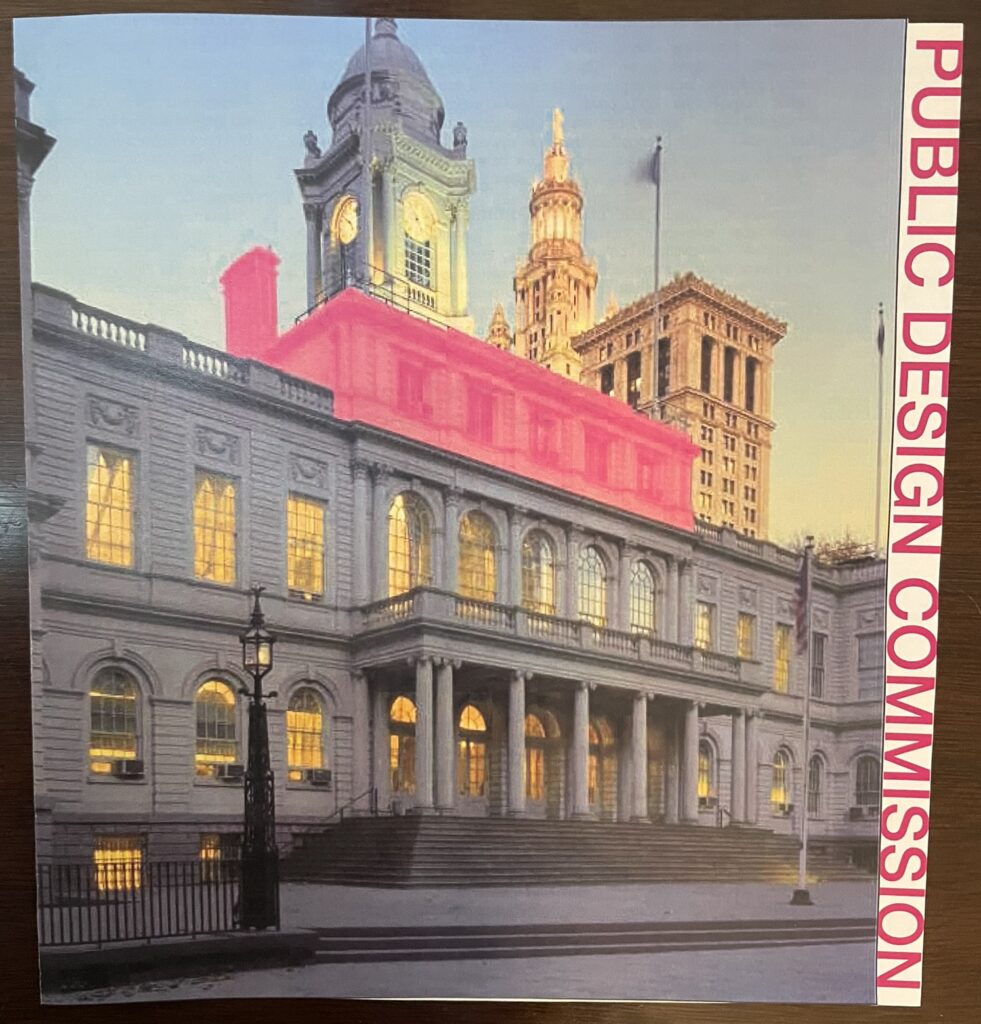
Adaptable Brochure Design
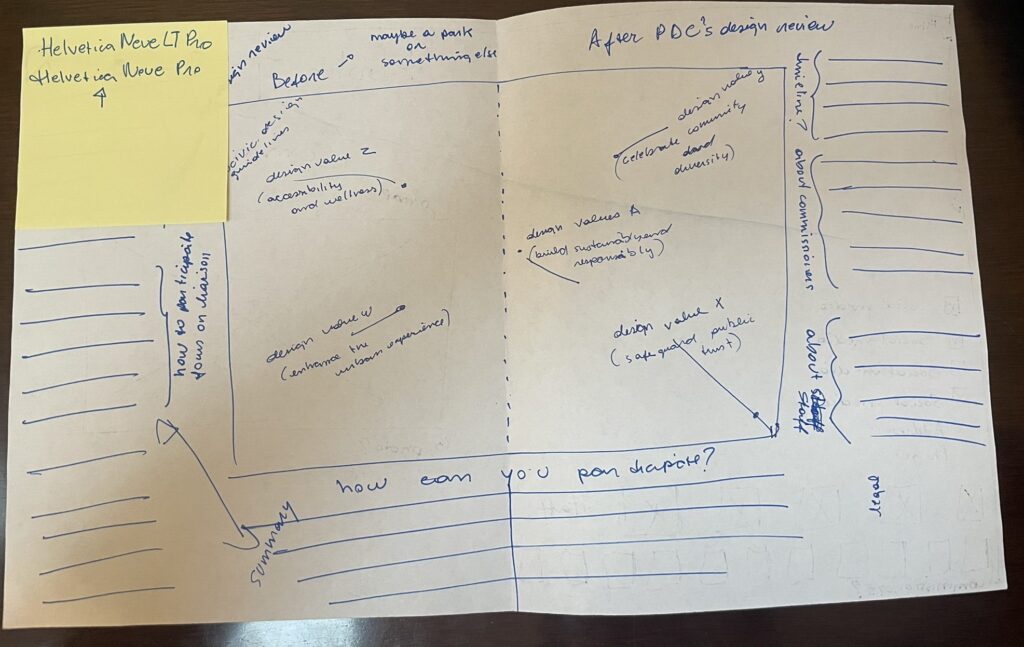
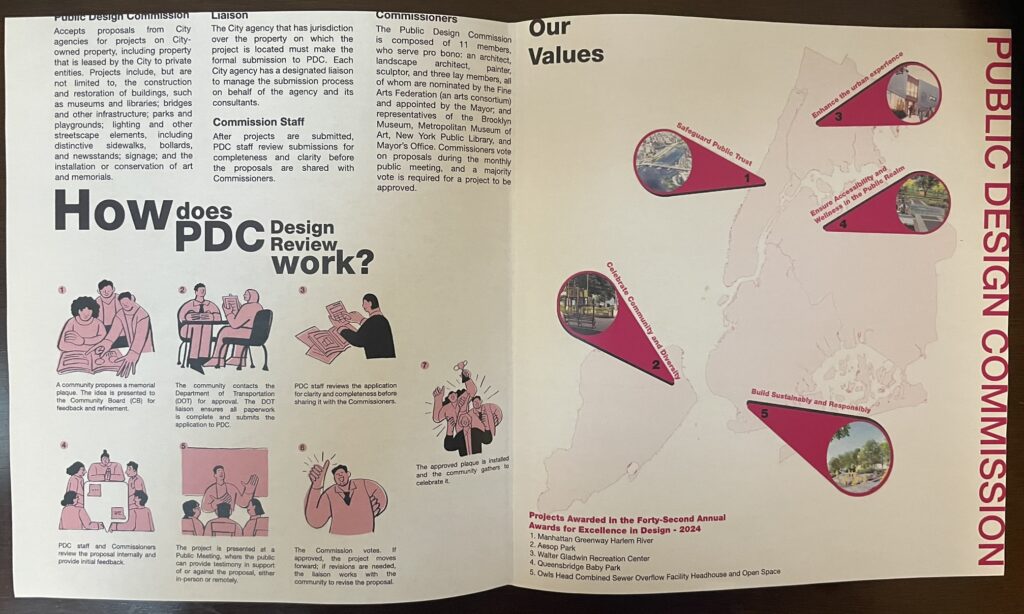
Based on these insights, I set out to create a flexible brochure that would serve as the primary deliverable. However, unlike a traditional brochure, the goal was to design something that could be adapted and repurposed for different formats, thusI designed the brochure with modular components, which meant that sections of it could easily be used in videos, social media posts, and email updates. One of the key assets is a storyboard illustrating the journey of a fictional community project, from idea to approval. This storyboard visually explains the process, showing how the community engages with the CB, works with the appropriate agency liaison, and submits the project to PDC. The storyboard is designed to be repurposed, such as for a carousel on Instagram, allowing the step-by-step process to be shared in an engaging, digital format. This approach made the brochure a medium-fidelity prototype: a flexible tool that could be repurposed as needed while maintaining consistency in messaging across different formats.
Additional Design Contributions
Alongside the core research and brochure work, I supported other key communication efforts for the Commission. I created presentation decks to assist commissioners in voting for the annual Design Awards, designed stairwell posters showcasing the previous year’s award winners, and produced animated content introducing new digital tools aimed at expanding public outreach. These contributions complemented the main project by reinforcing the Commission’s visual identity across multiple platforms and touchpoints.